
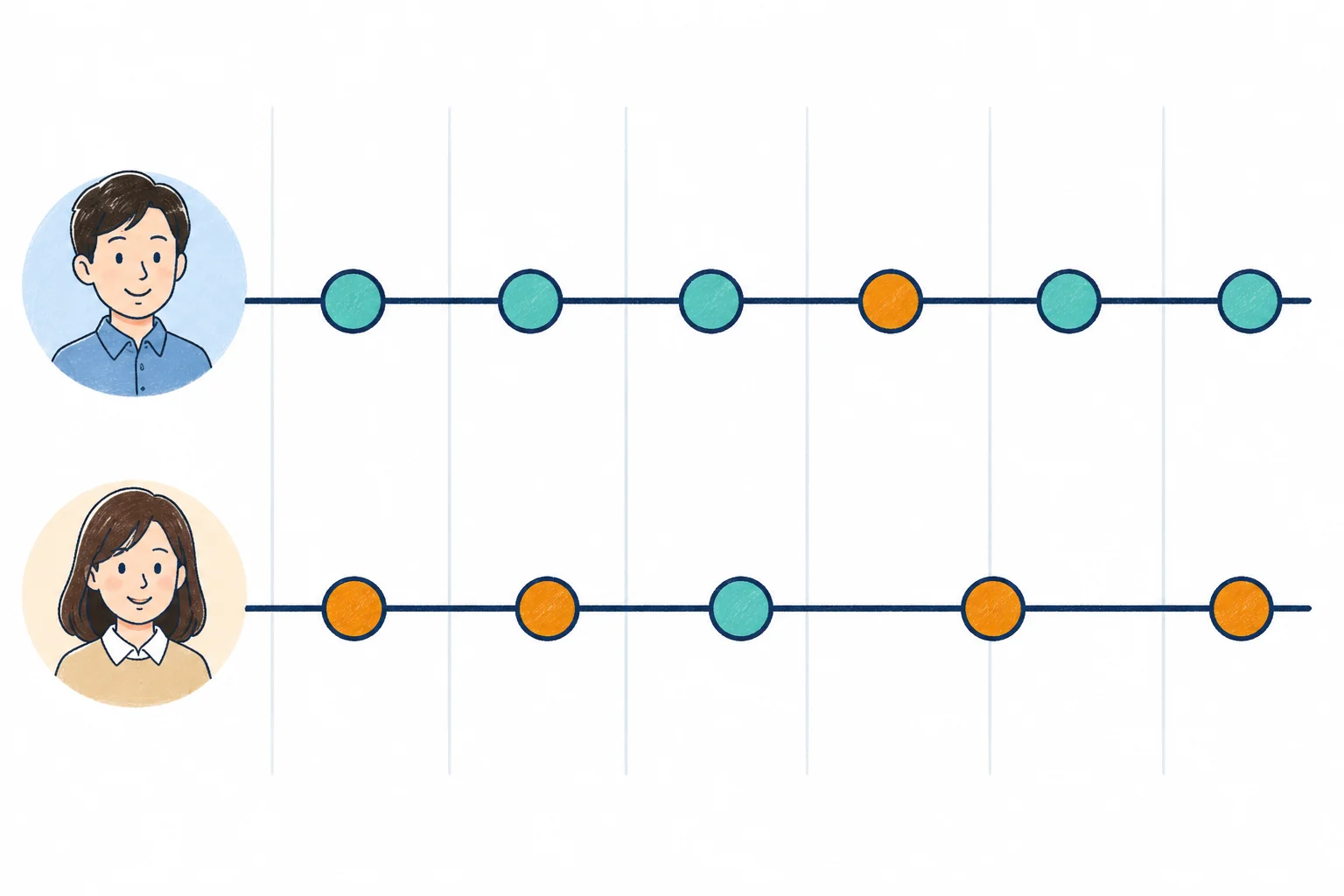
Scheduled Dates and Recorded Dates Explained
Learn to distinguish an expected date from a recorded date using a fictional timeline, matched entries, and a sample comparison.
Read the guideSee how expected dates and recorded dates can differ, and learn what a timing gap can—and cannot—tell you.
A planned entry describes an expected date; a recorded transaction documents a transaction in a record. A difference between those dates does not, by itself, establish that a payment took place.
Expected housing expense
Fictional housing expense
This fictional example illustrates dates only. Neither the planned entry nor the recorded date alone verifies that money was paid.
These guides explain how to compare planned and recorded entries, interpret date shifts, and understand scheduled records in desktop HomeBank.
Learn to distinguish an expected date from a recorded date using a fictional timeline, matched entries, and a sample comparison.
Read the guide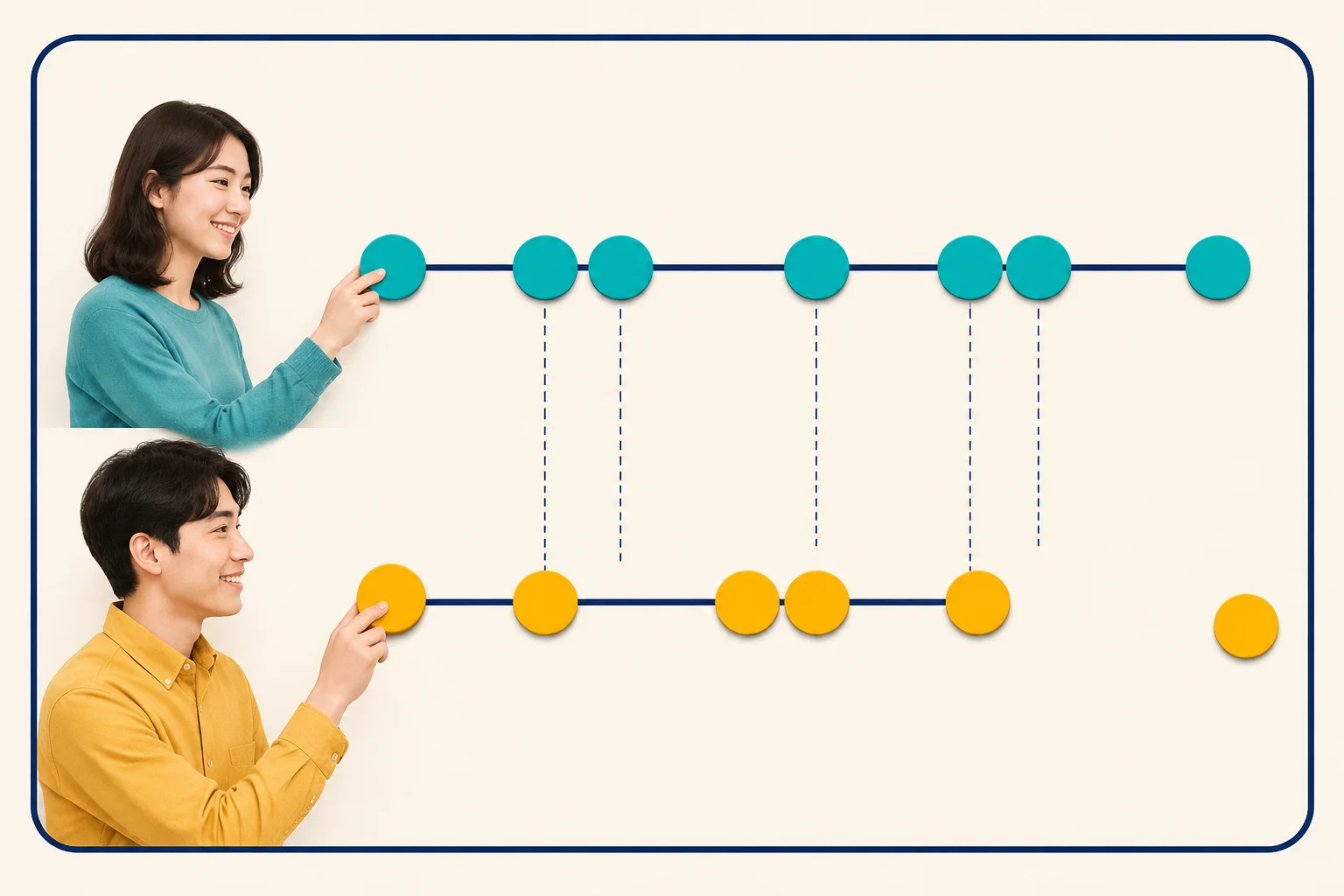
Work through expected and recorded entries, including shifted dates and unmatched records, and see why context matters before calling a difference a mistake.
Read the guide
Explore how scheduled transactions in the free desktop HomeBank program represent planned future records without executing payments.
Read the guideUse the same fictional record to compare the scheduled date with the recorded date. The steps identify the gap without assuming its cause.
The fictional housing expense is scheduled for May 30, 2026. Treat this as the expected date in the example.
The corresponding fictional transaction is recorded on June 2, 2026. This is the date shown for the recorded entry.
June 2 falls three days after May 30. That difference does not explain why the dates differ or prove that a payment occurred.
Explore software-specific scheduling or learn how reporting dates behave across calendar boundaries.
See how scheduled records work in the desktop HomeBank program. It is separate from the Apple app, which is a different product.
Explore the desktop guideExplore how calendar periods shape the way records are grouped and viewed when dates fall in different months.
Explore calendar structures